Your windshield is holding a camera, and it only works if it's aimed correctly
On most vehicles built in the last decade, there is a camera mounted to the windshield behind the rearview mirror. ADAS systems work in part using a camera mounted to the windshield. That camera is what feeds your lane keep assist, your forward collision warning, and in many cars your adaptive cruise control.
Here is the part drivers usually miss. When the old windshield comes out and a new one goes in, the camera's relationship to the road changes. A difference of a fraction of a degree at the glass becomes a difference of feet by the time the camera is looking a hundred yards down the highway.
When a windshield is replaced on a vehicle equipped with windshield-mounted ADAS cameras or related sensors, the system may require recalibration based on the OEM procedure. Calibration ensures the camera is aimed correctly and that the safety systems can read the road, lane markings, and surrounding traffic as designed.
What actually happens if you skip ADAS recalibration
There is no dramatic moment. Your car starts, drives, and looks completely normal. That is exactly what makes skipping recalibration risky: the failure is quiet.
An uncalibrated camera may misread lane markings, vehicles ahead, or objects in its field of view. Depending on the vehicle and the amount of misalignment, this could affect features like lane assistance, forward collision warning, or adaptive cruise control. Some vehicles may display a warning and disable the system, while others may not provide an obvious warning.
Some collision mitigation and automatic emergency braking systems can warn the driver and may apply braking assistance if the system detects a potential collision and the driver does not respond in time. Lane assistance systems may warn the driver or provide steering assistance depending on the vehicle and system design. These features act on your behalf, sometimes with the brakes and the steering. They need to be reading the road correctly.
There is also the resale and service-record side of it. A vehicle with a documented windshield replacement and no calibration record is a question mark for the next owner, and for any shop that works on the car later.
Which systems depend on the windshield camera
Not every driver-assist feature relies only on the windshield camera, but many common ADAS features may use it as part of the system. Depending on the vehicle, the windshield camera may support Lane Departure Warning, Lane Keep Assist, Forward Collision Warning, Automatic Emergency Braking, Collision Mitigation Braking, Traffic Sign Recognition, or Adaptive Cruise Control. Some systems may also use radar, lidar, ultrasonic sensors, or additional cameras.
In plain terms: Lane Departure Warning alerts the driver by sound or vibration when drifting lanes without signaling. Forward Collision-avoidance Assist detects distance to the vehicle ahead and warns by visual or audio signal when following too closely. Adaptive Cruise Control automatically adjusts speed to maintain a safe following distance.
If your vehicle has ADAS features and the windshield was replaced, calibration requirements should be checked by year, make, model, and VIN. If the OEM procedure requires calibration, it should be completed and documented as part of the repair.
Static vs dynamic calibration: the difference in practice
Manufacturers specify how their cameras get calibrated, and there are two methods. Some vehicles need one. Some need the other. Some need both, in sequence. The vehicle decides, not the shop.
Understanding the difference helps explain why one appointment takes an hour and another takes considerably longer, and why the technician might ask about the weather or the size of your driveway.
Static calibration: parked, precise, and done with targets
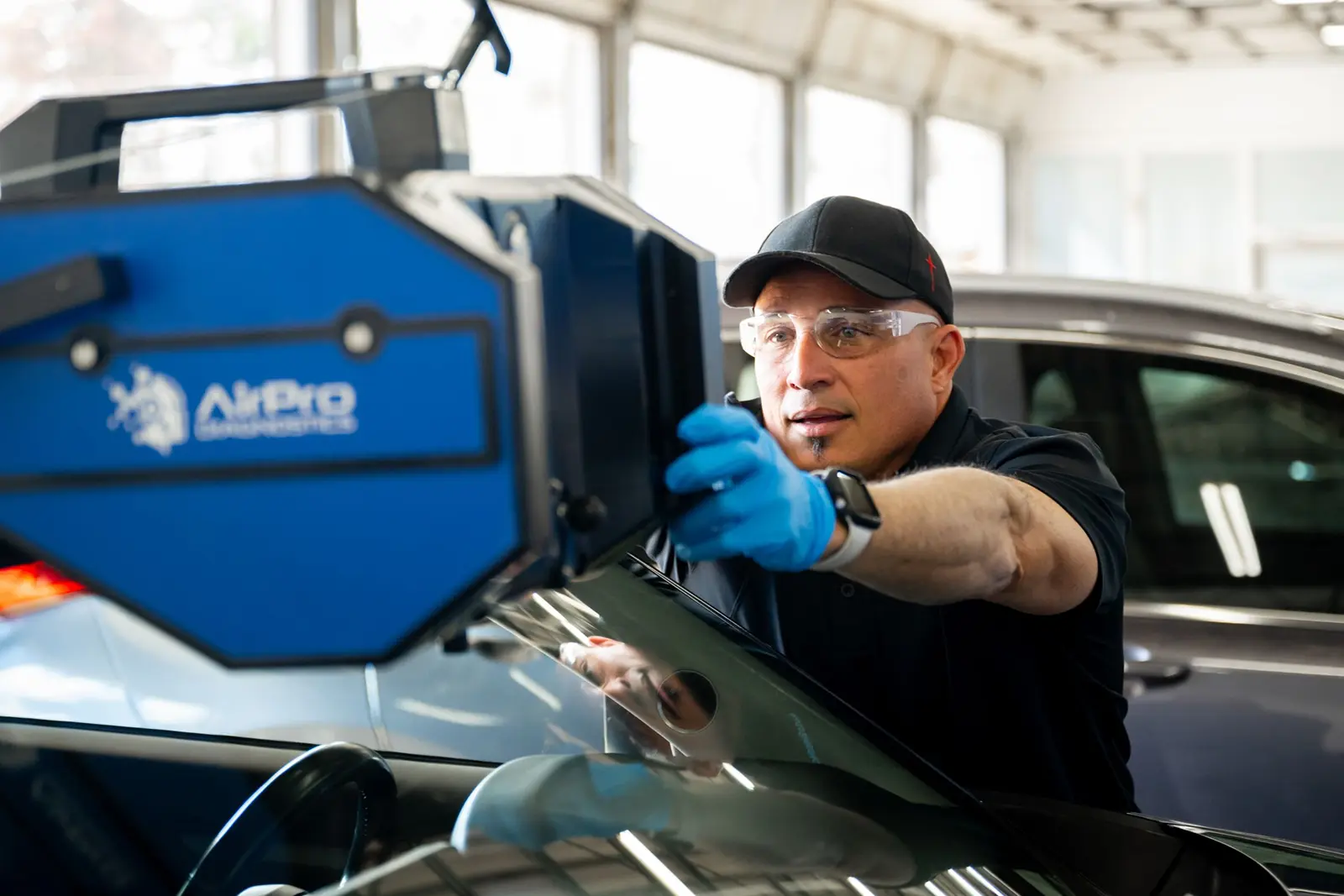
Static calibration happens with the vehicle stationary. The car is positioned at a manufacturer-specified distance and alignment from a printed target board, and the camera is taught what a known reference looks like at a known distance.
Static calibration is performed in a controlled environment using sophisticated electronics including a laser, to manufacturer-specified standards, by certified technicians. Static calibration is done while parked using special equipment and target images.
Controlled is the operative word. Level floor, consistent lighting, exact measurements, no clutter behind the target. This is the method that benefits most from a shop bay, though it can be performed on site when the space allows.
Dynamic calibration: the car learns on the road
Dynamic calibration is the opposite approach. The technician connects a device to the vehicle and then drives it, letting the camera collect real-world data and correct itself against actual lane lines and traffic.
Dynamic calibration uses a portable device plugged into the vehicle's OBD II port and is performed by driving at a specified steady speed and distance in favorable weather, per manufacturer instructions. Dynamic calibration requires driving under certain conditions so sensors adjust to real-world data.
The requirements are specific and non-negotiable. A steady speed for a set distance, clear lane markings, decent visibility. Heavy rain, faded paint, or stop-and-go traffic can force the drive to be repeated. That is a manufacturer requirement, not a technician preference.
Both static and dynamic calibration are crucial for ADAS to function accurately. Neither one is the shortcut version of the other.
Beyond windshield replacement: other times you need recalibration
A new windshield is the most common trigger, but not the only one. Events that require calibration or recalibration include windshield replacement, a significant accident or collision, ADAS dashboard warning lights, degraded ADAS performance, and major repairs to vehicle structure or suspension.
That suspension line surprises people. Ride height and alignment change where the camera is pointed relative to the road surface. Lift a truck, lower a car, or replace major structural components after a collision, and the camera's aim shifts with the body.
If your lane assist has started behaving oddly, or a driver-assist warning light has appeared and stayed on, that is worth mentioning when you book. Do not wait for it to sort itself out.
What calibration costs and how long it takes
Straight answer on pricing: calibration is an additional cost and is not included with a new windshield. The cost is provided during quoting. Any quote you get for a windshield replacement on an ADAS-equipped vehicle should break calibration out as its own line so you can see what you are paying for.
On timing, calibration may extend the estimated repair time because each vehicle has its own requirements. A vehicle needing static and dynamic calibration in sequence takes longer than one needing a single dynamic drive. Your technician can tell you what your specific make and model requires when you book.
On insurance: whether ADAS calibration is covered depends on your insurance coverage, and Auto Glass Now can help validate coverage. Worth asking about before the appointment rather than after.
In-shop or mobile: both are options
Calibration can be completed at the appointment whether in-shop or via mobile service. Mobile just comes with conditions attached, and they are worth knowing before you pick a location.
Mobile calibration requires the right conditions. The vehicle may need a level surface, adequate clearance around the vehicle, proper lighting, clear weather, and an area free of obstructions. Exact space requirements vary by vehicle and OEM procedure, so the technician must verify the setup requirements before attempting the calibration.
In-shop service gives technicians access to more advanced equipment and a fully controlled environment. If your vehicle requires static calibration and the weather is uncooperative, the shop bay is usually the faster path to getting it done right the first time.
What to ask before you book a windshield replacement
A few questions save a lot of frustration:
Does my vehicle require calibration after a windshield replacement, and is it static, dynamic, or both? Is the calibration cost quoted separately from the glass? Can it be completed at the same appointment? If I choose mobile, does my location have the clearance and weather conditions the calibration needs?
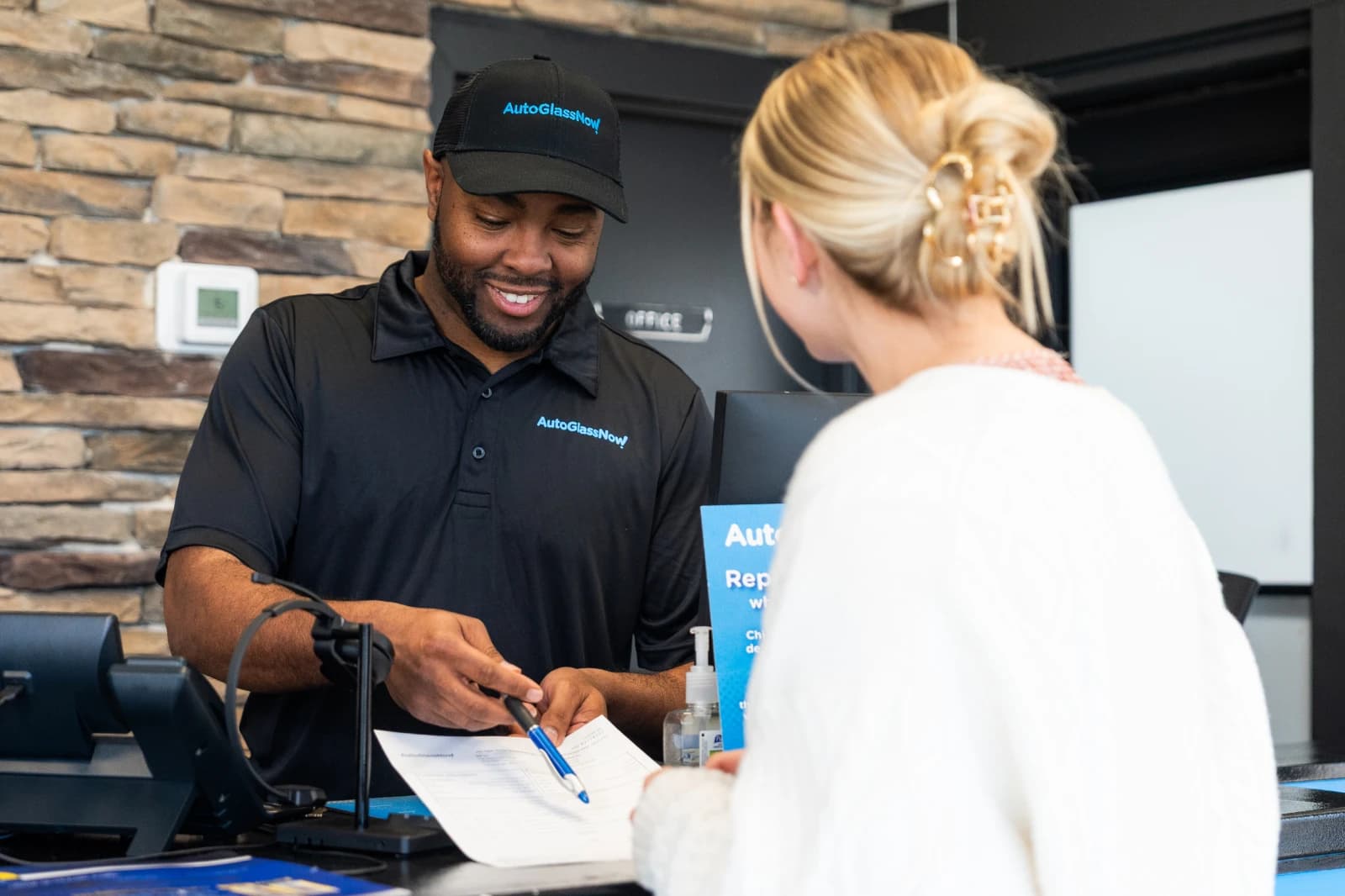
A shop that can answer those without hedging is a shop that does this work regularly. Auto Glass Now provides ADAS windshield camera calibration and offers both in-shop and mobile service, and the team can walk through what your specific vehicle needs when you request a quote.
One last thing. If you already had a windshield replaced somewhere else and nobody mentioned calibration, it is worth having the vehicle checked. The features are only as good as the aim of the camera behind the glass.
Get a quote that includes calibration up front
You can get a quote and schedule an appointment online or by phone at 1-888-4-FIX-GLASS (1-888-434-9452). Have your year, make, and model ready, along with whether your vehicle has lane assist, adaptive cruise, or automatic emergency braking, and you will get a clearer picture of what the job involves.
Auto Glass Now accepts all auto insurance and will manage your insurance claim from start to finish. Same-day and next-day service is available. Ask about calibration when you call so it is scheduled alongside the glass work rather than becoming a second trip.